Materials
Why a cushion geotextile is the cheapest insurance on a liner
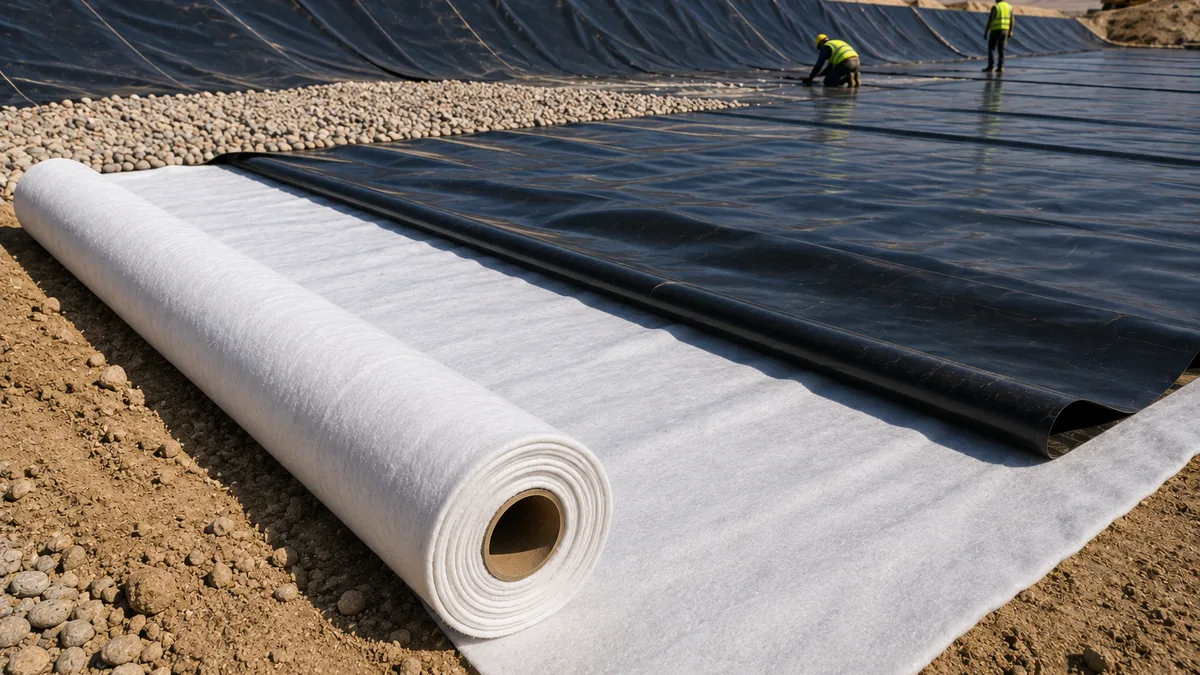
It is a fabric that costs a fraction of the membrane above it, and leaving it out is the most expensive saving on most lining projects.
A farm reservoir on sand loses water two ways at once. Telling the two apart is the first step, because only one of them is fixed by lining.
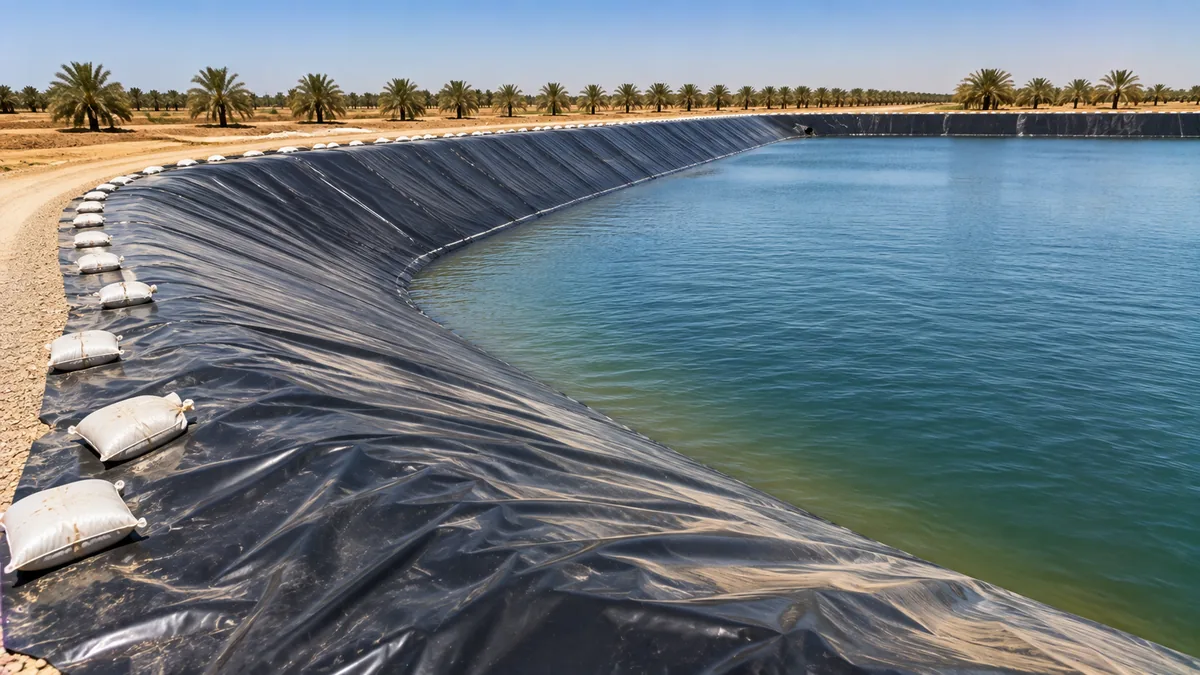
Farms across Al Ain, the Al Dhafra region and the inland areas of the northern emirates depend on stored water. The reservoir is filled from a well or a tanker and drawn down over days or weeks — and on the gravelly, permeable ground typical of these areas, an unlined basin quietly returns a large share of that water to the ground.
Both make the level drop, and they need completely different responses. A simple field test separates them:
Evaporation alone in a UAE summer is substantial. If your basin is dropping at three or four times the container rate, the majority of the loss is going into the ground and lining is the answer.
For an exposed reservoir with a few metres of head, 1.0 mm HDPE is the practical minimum and 1.5 mm is the sensible default. The reasons to go to 1.5 mm are exposure and abuse rather than water pressure: a farm reservoir gets cleaned, gets pumps dropped into it, occasionally gets a tractor near it, and sits under full sun whenever it is drawn down.
On gravelly Al Ain-type subgrades, budget for a 300–400 g/m² cushion geotextile beneath the sheet. It is a small line item and it is what stops slow puncture from the material below.
Lining does nothing for evaporation, and on an open basin in this climate that loss is significant. Three approaches, in descending order of both effectiveness and cost:
Which makes sense depends on how the reservoir is operated and what the water costs you. If the basin is drawn down and refilled constantly, a cover is harder to justify than on one that sits full for weeks.
Lining a farm reservoir is one of the few agricultural investments with an arithmetic that is genuinely simple. Take the measured seepage rate, multiply by the hours the basin holds water each year, and multiply by what a cubic metre costs you — pumping energy, tanker deliveries, or the value of what that water grows. Compare with the lining cost across a design life measured in decades.
On permeable ground the answer usually comes back in a small number of seasons, and after that the saving is permanent and needs no operating spend. That is a rare shape of return on a farm.
It depends entirely on the subgrade. On clean sand and gravel the loss can be a large fraction of the stored volume over a few weeks; on tighter silty ground it may be modest. The only way to know your number is to measure it with the still-days test described above.
Yes, and it is common. The basin is drained and dried, the base regraded and stones removed, and the new membrane installed — over a cushion geotextile if the base is rough. Old brittle film is generally better removed than lined over.
HDPE at 1.0–1.5 mm for almost all farm reservoirs. LLDPE is worth considering if the ground is likely to settle or the basin has tight geometry.
Need this specified for a real project? Farm reservoir lining is regular work for us as geomembrane liner suppliers in the UAE — send the basin dimensions through the enquiry form and you will get a sheet take-off, a gauge recommendation and a price back.
Farm, raw-water and TSE storage lined and tested.
Smaller basins, aquaculture and landscape water.
It is a fabric that costs a fraction of the membrane above it, and leaving it out is the most expensive saving on most lining projects.
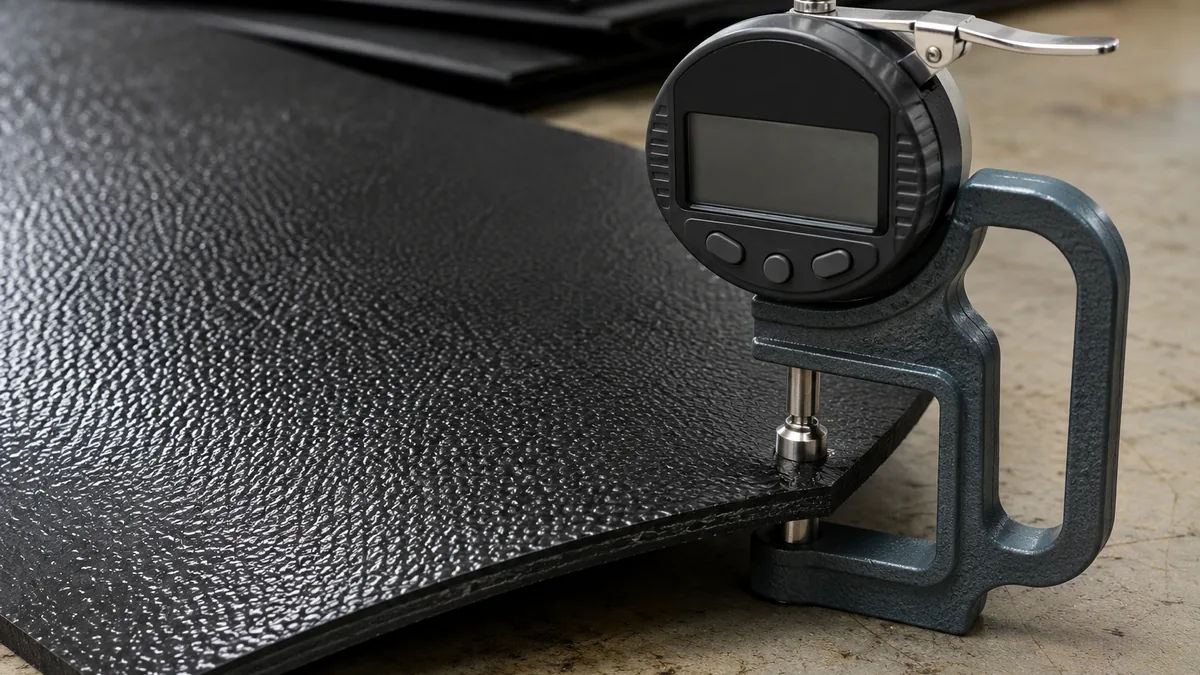
American specifications say mil. Gulf specifications say millimetres. Chinese mills sometimes say microns. They are the same measurement and mixing them…
Project enquiry
Send the dimensions and what you are measuring. We will tell you what lining it would cost.