Durability
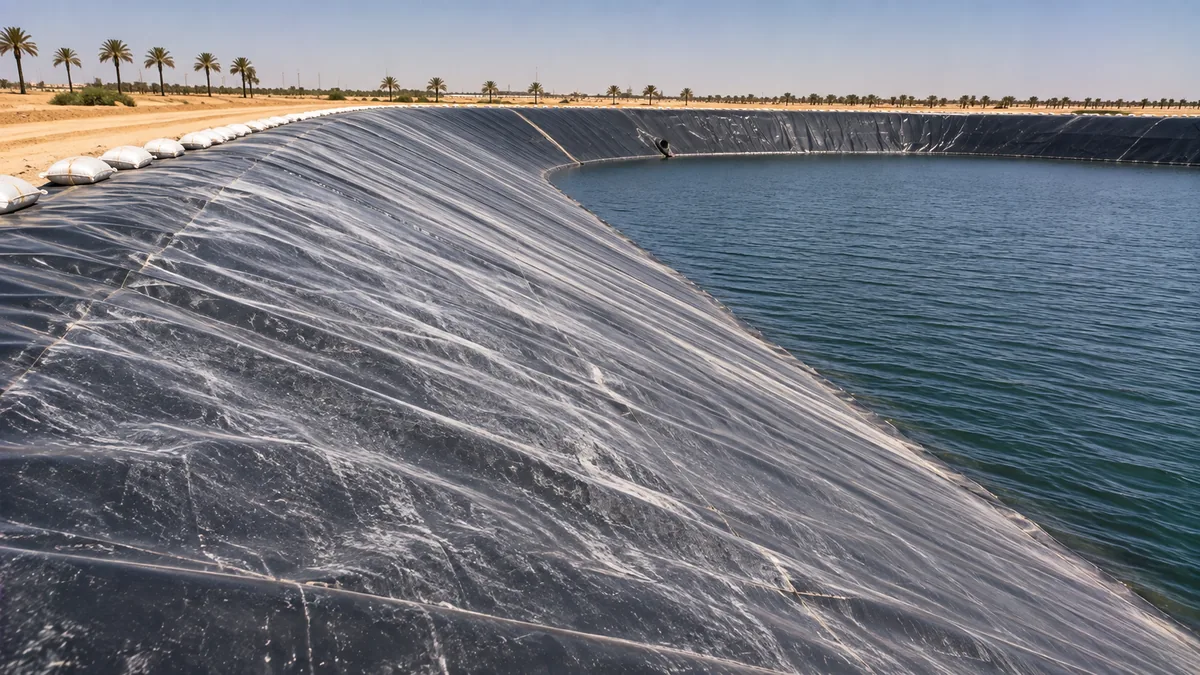
How long does a geomembrane liner last in UAE sun?
Buried liner is a decades-long asset almost anywhere. Exposed liner in a Gulf summer is a much more interesting question, and the answer depends on things…
Nobody can publish a meaningful rate for geomembrane, because the biggest input is a commodity. What you can do is understand the structure of the number.
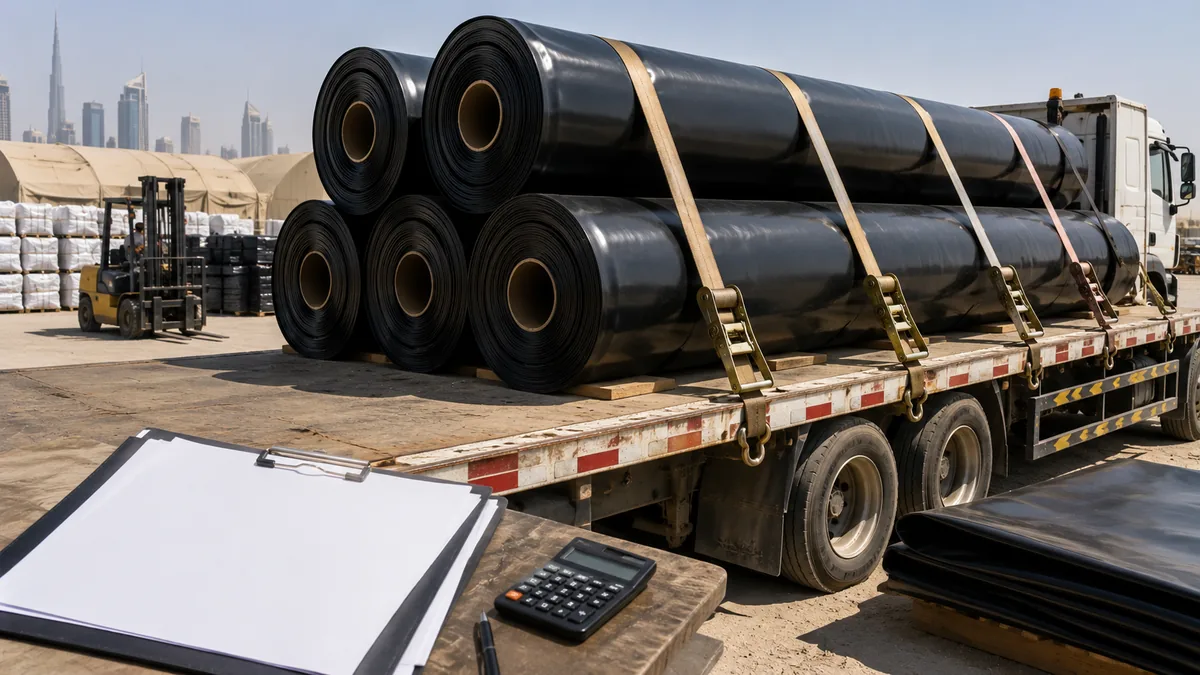
Buyers reasonably want a rate per square metre. Suppliers reasonably refuse to publish one. Both positions are defensible, because a geomembrane is fundamentally a resin product and resin prices move with oil, feedstock availability, freight and exchange rates. A published rate is either stale or padded enough to survive being stale.
Polyethylene resin typically accounts for something in the range of 60 to 75 per cent of the cost of a finished geomembrane. When resin moves, liner prices follow within a month or two. This is why a quotation from six months ago is not a benchmark, and why a supplier holding a rate open for ninety days is either very confident or building in a cushion.
Resin grade is a separate lever. Virgin resin with a full carbon-black and antioxidant package costs meaningfully more than blended or reprocessed material. Both can be sold as “HDPE geomembrane”. Only one has a mill certificate that stands up.
Thickness is close to linear on the material side — 2.0 mm sheet contains twice the resin of 1.0 mm sheet. Texturing adds a modest premium because the production line runs slower and the process is more demanding. Colour options such as white-surfaced sheet are a further premium and usually a made-to-order item.
Where thickness is not linear is installation. Welding 1.5 mm sheet is not fifty per cent more work than welding 1.0 mm. So on an installed price, moving up a gauge costs proportionally less than it does on a supply-only price — which is worth remembering when a specification is borderline.
Production runs and freight both reward scale. Container quantities carry materially better rates than two-roll orders, and part rolls attract a cutting charge. If you have several basins across a site or a programme, price them as one order rather than three, even if delivery is staged.
An installed rate adds welding crew, welding and testing equipment, generators, consumables, mobilisation, and supervision. What moves it most is not area but detail count. A crew welding 300 metre panel runs across an open reservoir covers ground fast; the same square metreage split into small basins with thirty pipe penetrations is slow, skilled, extrusion-welded work.
Other things that move an installed price:
Before comparing totals, line up five things:
Two quotes that differ by a third usually differ in scope by a third. Occasionally they differ because one is for a materially inferior product.
A rate substantially below the market is not automatically a scam, but it usually has an explanation. The common ones are: sheet running below nominal core thickness, reprocessed resin content, missing or generic certificates, a supply-only rate presented against an installed scope, or testing and documentation quietly excluded.
Ask which one it is. A supplier who can explain a low price — excess stock of a gauge, a container arriving anyway, a quiet month for the crew — is fine. One who cannot is telling you something.
It moves with resin, gauge, texture and volume, so a current quotation is the only reliable answer. What we can tell you is the structure: material is the majority of a supply price, and installation adds crew, plant, testing and mobilisation on top.
Only if the quotation says so. Supply-only and installed rates are commonly confused, and the gap between them is large. Always check what the rate covers before comparing.
Yes, noticeably. Production efficiency and freight both improve with volume, and part rolls carry cutting charges. Consolidating several basins into one order is the simplest saving available on most projects.
Need this specified for a real project? For current rates, we quote live as HDPE geomembrane suppliers across the UAE — send the basin dimensions through the enquiry form and you will get a sheet take-off, a gauge recommendation and a price back.
Quoted live against your quantity, gauge and delivery point.
Installed rates priced on detail count, not just area.
Buried liner is a decades-long asset almost anywhere. Exposed liner in a Gulf summer is a much more interesting question, and the answer depends on things…
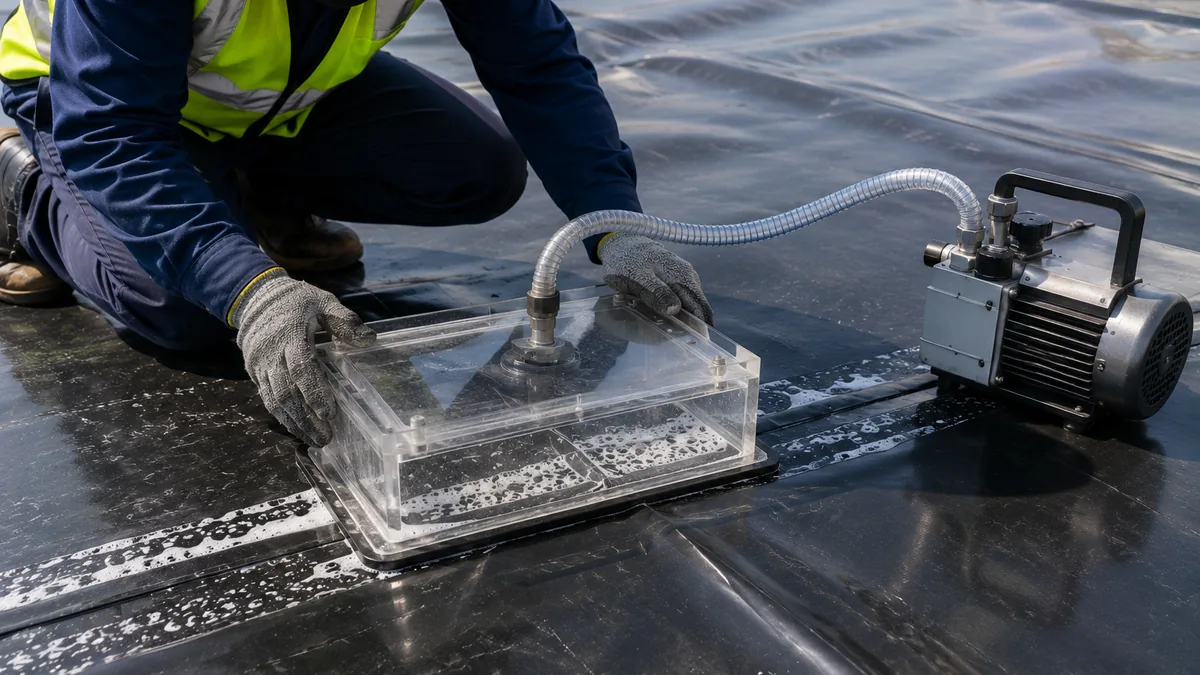
Most liner leaks are not seam failures. They are punctures made after the seams passed — which is why the testing regime has more than one method in it.
Project enquiry
Send quantity, gauge and delivery emirate for a supply price, or a drawing for an installed one.