Buyer's guide
Buying HDPE geomembrane in the UAE: what to check before you order
Two quotations for the same basin can differ by half, and both can be for something described as “1.5 mm HDPE geomembrane”. Here is what…
The country is small enough that one stockholding serves all of it, and varied enough that the lining job in Ras Al Khaimah is nothing like the one in Al Ain.
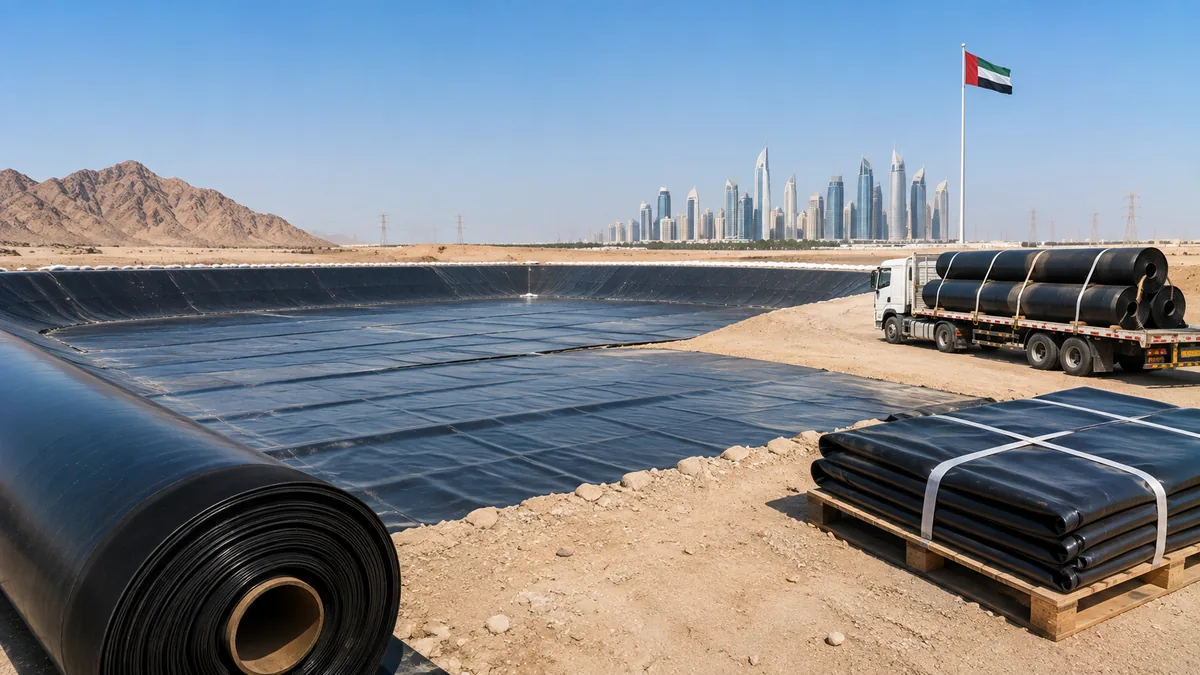
Two things vary across the UAE in ways that change a lining specification: what is under the basin, and what goes in it. Everything else — the sheet, the welding, the testing — stays the same.
Work here splits between industrial containment in Jebel Ali, Dubai Industrial City and Al Quoz, and landscape water: ornamental lakes, irrigation storage and treated-effluent basins serving the districts and golf developments.
Inland sites are dune sand — excellent for a liner to sit on and so permeable that unlined basins hold nothing. Nearer the coast, sabkha and a high water table change the design driver from seepage to uplift: the question becomes what happens beneath the membrane when the basin is drawn down, and the answer is relief venting.
The largest emirate produces the widest spread of work. Agriculture in Al Dhafra, around Madinat Zayed and out towards Liwa, needs irrigation reservoirs on ground that drinks water. Mussafah, ICAD and Ruwais generate industrial containment with proper specifications and documented test regimes attached. Coastal sites bring sabkha and groundwater again.
The practical constraint is distance. A basin two hours into the desert is straightforward engineering and a logistics exercise in everything else, and mobilisation deserves honest pricing rather than optimism.
Sharjah splits between its industrial belt — Al Sajaa, the numbered industrial areas, Hamriyah — and agriculture inland around Al Dhaid and Al Madam. It also has a substantial waste and water management sector, which brings the heavily specified end of the trade: lagoon lining, leachate containment and capping with CQA documentation as a deliverable.
Ras Al Khaimah is quarry and cement country, and the subgrades reflect it. Washing-plant recirculation basins, settlement ponds and process water storage sit on crushed rock and wadi gravel — the harshest surface a membrane can be asked to sit on. Here a heavy cushion geotextile is part of the design, not an upgrade.
Ajman and Umm Al Quwain contribute smaller work: aquaculture and shrimp basins, factory containment, and irrigation storage inland around Falaj Al Mualla. Because the jobs are smaller, mobilisation is a bigger share of an installed price, so bundling basins into one visit genuinely saves money.
Fujairah is the outlier. More rainfall, mountains and wadis that carry real flow, rock and gravel instead of dune sand, and an industrial base around the port and the storage terminals. The rainfall changes the brief: freeboard, overflow provision and protection of the anchor trench against overtopping matter far more here than they do on the west coast, because a storm event can put serious inflow into a basin.
Agricultural heartland, and the place where the economics of lining are easiest to demonstrate. Farms out towards Remah, Sweihan and the border depend on stored water, and on gravelly permeable ground an unlined reservoir returns a large share of it to the ground.
Evaporation is also at its most punishing here, so Al Ain projects raise the cover question more often than elsewhere — floating covers, shade structures or surface elements over open storage.
If you are researching the sector more broadly rather than a specific basin, geomembrane UAE covers the wider market — products, applications and who is active where — and is worth a look alongside the emirate notes above.
Whatever the emirate:
Local pages for each area are on the service areas index, with the ground conditions and typical works set out for each.
The sheet does not. What changes is the subgrade, which decides whether a cushion geotextile is needed and how much preparation the base takes, and the application, which decides the gauge. Rock in Ras Al Khaimah and dune sand in Dubai are genuinely different design problems.
Yes. Farms in Al Dhafra, sites in the mountains and anywhere else in the country are served; distance affects the mobilisation line of a quotation rather than whether the job is taken on.
Ras Al Khaimah, Fujairah and the inland gravel plains, where subgrades are rock and wadi material. It is also worth specifying anywhere the basin is deep, whatever the emirate.
Need this specified for a real project? We deliver and install in every emirate as HDPE liner suppliers in the UAE — send the basin dimensions through the enquiry form and you will get a sheet take-off, a gauge recommendation and a price back.
Delivered to any emirate from stock.
Crews mobilised across the country.
Two quotations for the same basin can differ by half, and both can be for something described as “1.5 mm HDPE geomembrane”. Here is what…
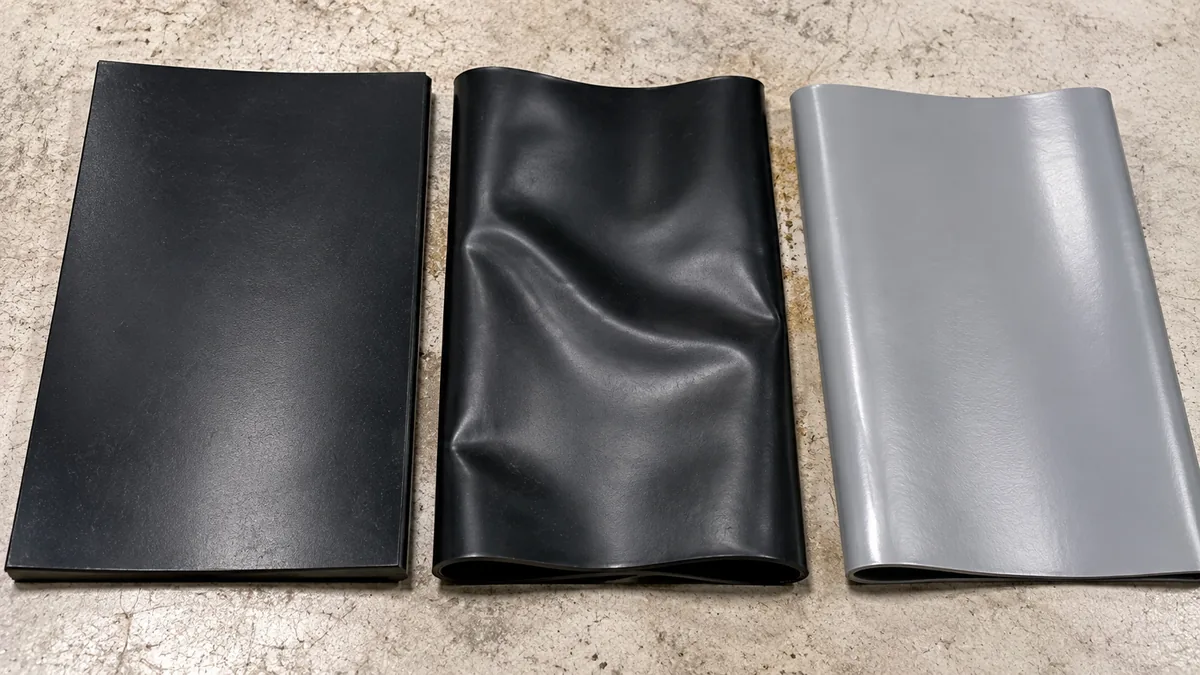
Three polymers, three very different personalities. Picking between them is not about which is best — it is about what the ground under your basin is…
Project enquiry
Send the location and basin details and we will price sheet, delivery and installation together.