Installation
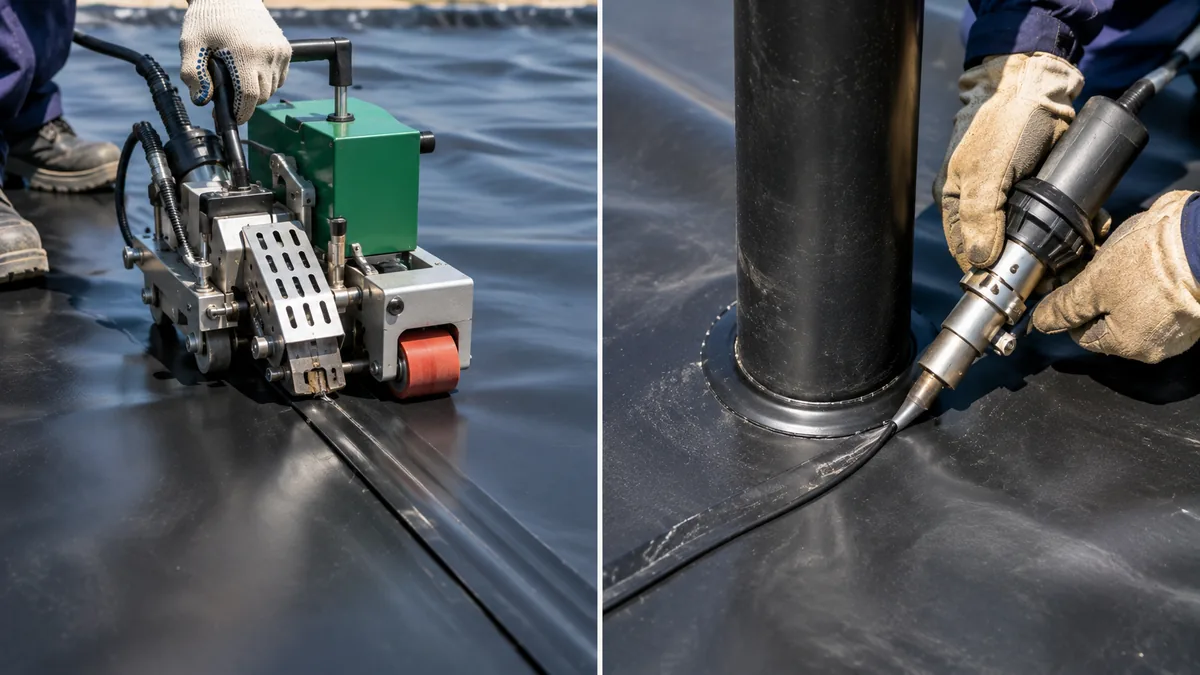
Hot wedge vs extrusion welding: which seam goes where
Sheet arrives from the mill consistent and certified. Seams are made on site, in the heat, by people. That is where lining projects succeed or fail.
Three polymers, three very different personalities. Picking between them is not about which is best — it is about what the ground under your basin is going to do.
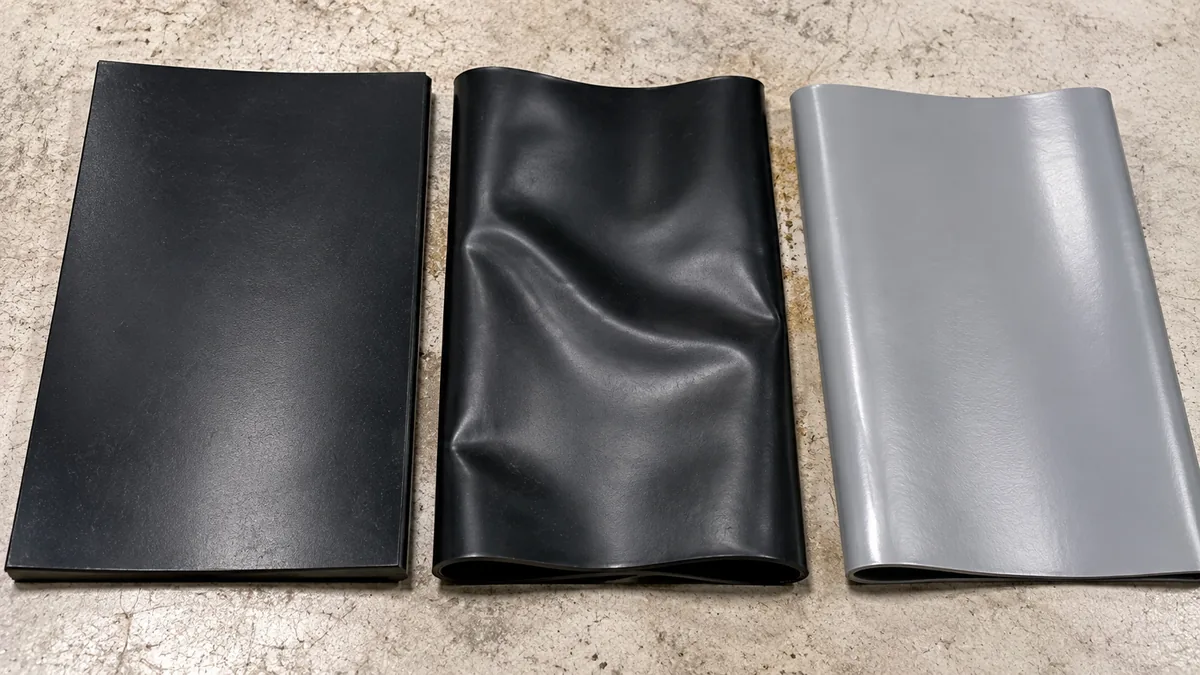
Ask what the best geomembrane material is and you will get an argument. Ask what the best material is for a two-metre-deep irrigation reservoir on graded sand, left exposed, holding well water, and the answer is immediate. Material selection is a question about conditions, not about polymers.
High-density polyethylene is the most-used geomembrane in the world, and in the UAE it is the default choice for almost everything. Three properties explain that.
The trade-off is stiffness. HDPE has a relatively low strain limit, so it does not tolerate differential settlement, and it wants to bridge across corners rather than conform to them. It is also thermally active: a panel welded tight in the cool of dawn will be under tension at three in the afternoon, which is why installers deploy it with deliberate slack.
Linear low-density polyethylene trades strength for flexibility. Its tensile strength is lower than HDPE, but it stretches several times further before failing, and that changes what it can do.
Use LLDPE where the subgrade is soft, reclaimed, or expected to settle unevenly; where the basin geometry is complicated with many corners and small radii; and for landfill closure caps, which have to keep following a settling waste mass for years. Chemical resistance is good, though not quite at HDPE's level, and welding is essentially the same process with different settings.
PVC geomembrane is easy to handle, easy to fabricate into large factory panels, and inexpensive. It also relies on plasticisers to stay flexible, and those plasticisers migrate out over time — faster under heat and ultraviolet. In this climate, an exposed PVC liner embrittles and cracks.
That does not make it useless. Buried PVC, covered PVC, short-life applications and indoor or shaded water features are all reasonable. For an exposed reservoir or a pond that has to last twenty years under a Gulf sun, it is the wrong material, and we will say so rather than sell it.
The same caution applies to the thin LDPE agricultural films sold as cheap pond liner. They have their place in temporary work. They are not an engineered lining.
| Property | HDPE | LLDPE | PVC |
|---|---|---|---|
| Chemical resistance | Excellent | Very good | Moderate |
| UV resistance (exposed) | Excellent | Very good | Poor without cover |
| Flexibility / elongation | Low | High | High |
| Tolerance of settlement | Poor | Good | Good |
| Field welding | Wedge & extrusion | Wedge & extrusion | Hot air / solvent |
| Typical UAE use | Reservoirs, lagoons, landfill, canals | Caps, soft ground, tight geometry | Covered or short-life work |
Run through five questions in order:
For the overwhelming majority of UAE containment projects the answer lands on HDPE, at a gauge decided by depth, exposure and subgrade. Where it does not, it is usually because the ground is going to move.
Neither is universally better. HDPE gives higher strength, better chemical resistance and better UV performance; LLDPE gives far greater elongation. Choose HDPE for strength and chemical exposure, LLDPE where the ground will settle or the geometry is tight.
Only if it is covered. Exposed PVC loses plasticiser under Gulf heat and UV and becomes brittle. For an exposed basin, HDPE or LLDPE is the appropriate material.
They can be joined, but the weld is only as good as the weaker material and the settings need care. Where a design mixes the two — an HDPE base liner with an LLDPE cap, for example — the transition detail should be designed rather than improvised on site.
Need this specified for a real project? We hold both HDPE and LLDPE sheet and supply geomembrane liner across the Emirates — send the basin dimensions through the enquiry form and you will get a sheet take-off, a gauge recommendation and a price back.
Both polymers in stock, with certificates and matched extrudate rod.
Material chosen for the basin, not for the price list.
Sheet arrives from the mill consistent and certified. Seams are made on site, in the heat, by people. That is where lining projects succeed or fail.
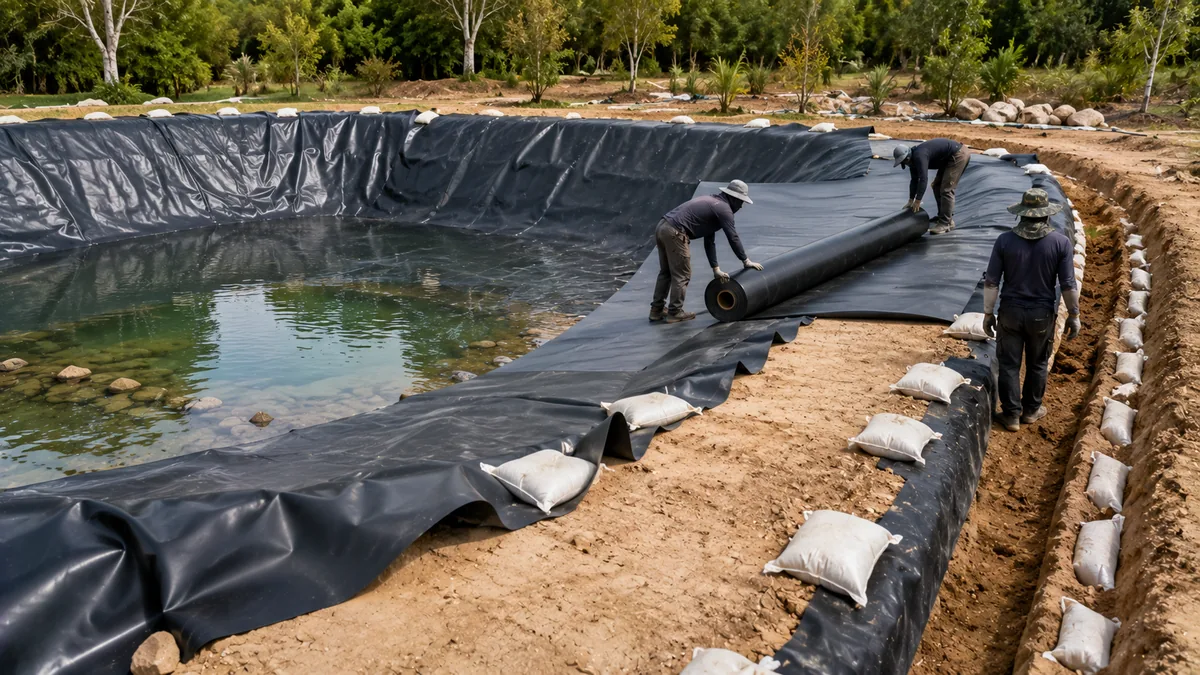
The sheet is the easy part. Everything that decides whether a pond holds water happens before the first roll comes off the truck and after the last seam…
Project enquiry
Tell us the depth, the fluid, the subgrade and whether the liner stays exposed. We will specify it.